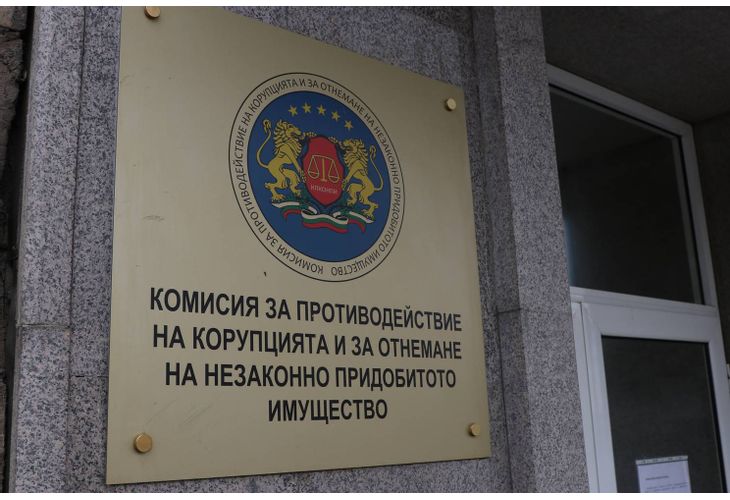
Civil forfeiture in Bulgaria is a topic that has long been at the epicenter of public interest – and for good reason. For accuracy, when discussing the former CPAAC, it should be noted that as of October 6, 2023, the administration functions as two separate commissions. One is the Commission for Counteracting Corruption (CPC), and the other is the Commission for Forfeiture of Illegally Acquired Assets (CAFI). Nevertheless, the old acronym remains a common term for asset forfeiture activities.
This analysis is dedicated to several recent decisions by the European Court of Human Rights (ECHR) and an interpretive decision by the Supreme Court of Cassation (SCC), which shed ample light on the systemic problems in the work of CAFI and its predecessors. These rulings not only reveal how a tool for combating crime has turned into a lucrative business for certain circles but also foreshadow serious financial consequences for the Bulgarian state.
The Need for a Lawyer in CAFI Cases
At the heart of the problem lies CAFI's aggressive approach, often filing claims for colossal sums that are many times greater than the established income discrepancy of the individuals being investigated. This practice, besides violating fundamental legal principles, puts immense pressure on citizens and businesses. In such a situation, an adequate defense against CAFI is impossible without the assistance of an experienced lawyer for CAFI cases, who is deeply familiar with both national legislation and ECHR case law.
Recently, in the case of "Todorov and Others v. Bulgaria," the ECHR once again condemned our country for violations of the European Convention on Human Rights. The Strasbourg court unequivocally states that the forfeiture of assets exceeding the amount of unexplained income constitutes an excessive and disproportionate burden. In other words, if the discrepancy is BGN 100,000, the state cannot file a claim for BGN 1,000,000, as is often the case.
The consequences of this flawed practice are already apparent. The state has been ordered to pay compensation to the applicants, but this is just the tip of the iceberg. A wave of claims from hundreds of citizens whose property was confiscated in a similar manner is expected. The potential costs to the state budget are estimated to be in the tens, if not hundreds, of millions of levs.
The Role of Interpretative Decision No. 2/2022 of the SCC
In an attempt to address the issue, the SCC issued an interpretive decision introducing the requirement for a "reasonable connection" between the crime for which a person is convicted and the property sought to be confiscated. This decision is a step in the right direction, but unfortunately, it does not solve all the problems. CAFI's practice of filing claims for assets acquired decades before the alleged crime continues to be a reality. The only effective counter-mechanism remains quality legal assistance from a **lawyer specializing in civil forfeiture cases**.
In conclusion, civil forfeiture in Bulgaria has seriously deviated from its original purpose. Instead of an instrument of justice, it has become a profitable scheme. The decisions of the ECHR and the SCC are a clear signal that this practice is unsustainable and will be costly for taxpayers. For citizens and businesses facing a machine like CAFI, professional defense is not a luxury but an absolute necessity.
Legal Sources
- ECHR: Todorov and Others v. Bulgaria (Application nos. 50705/11 et al.) — European Court of Human Rights, judgment on civil forfeiture disproportionality
- SCC Interpretative Decision No. 2/2022 — Supreme Court of Cassation, requirement for "reasonable connection" between crime and confiscated property
- Act on Counteracting Corruption and on Forfeiture of Illegally Acquired Assets (ACIAFA) — Bulgarian legislation
- European Convention on Human Rights — Art. 1 of Protocol No. 1 (protection of property)