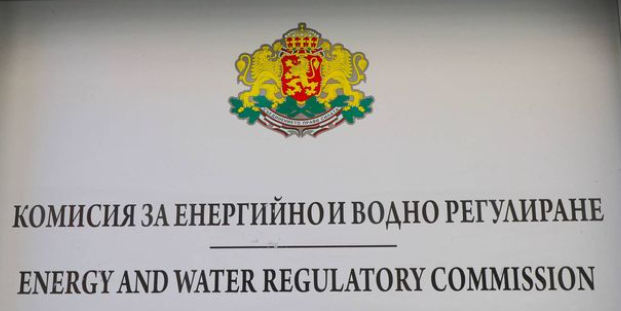
High Voltage as a Mechanism for Inflated Bills: A Legal and Economic Analysis of Regulatory Refusal
The recurring problem of disproportionately high electricity bills in recent months is a typical example of a situation where formal compliance with the law conceals a deep economic injustice. One of the least discussed, yet large-scale mechanisms for artificially inflating electricity costs, is maintaining the grid voltage at the upper limit of the permissible standard, combined with frequent, short-term excesses. This process is not accidental but functions as a deliberate strategy with a dual economic effect for the electricity distribution companies (ERPs).
The Physics of Overbilling: Why Voltage Determines the Bill
The basic mechanism is rooted in Ohm's law and the formula for power in resistive loads (boilers, heating appliances, stoves). Power P is directly proportional to the square of the voltage (P = U^2 / R). When an ERP supplies a voltage of 250V instead of the nominal 230V (an increase of less than 9%), the energy consumed by resistive appliances increases by nearly 18%. The consumer pays for "parasitic" heat they did not request, while the electricity meter strictly records the increased flow of active energy.
The Dual Economic Benefit for Energy Companies
For network operators, high voltage is a technological tool for optimizing their own balance. First, by increasing the voltage, the current strength for transmitting the same power is reduced, which minimizes heat losses in the conductors (I^2 \cdot R) – an expense that the companies would otherwise have to cover themselves. Second, the artificially increased consumption by the end customer directly increases the volume of electricity sold. Thus, the company simultaneously reduces its costs and inflates its revenues, operating in the legal "gray area" up to 253V.
The Problem of Proof in a Legal Process
It is technically entirely possible to establish systemic overvoltage through certified power quality analyzers that record the parameters in real time. However, it is important to note that private measurements, even if made with precise equipment, are rarely accepted as "indisputable evidence" in a court case. ERPs often dispute the measurement methodology or the calibration of the instruments, and the standard BDS EN 50160 is written in such a way as to allow companies statistical "leeways" that make the procedural proof of guilt extremely cumbersome.
Regulatory Passivity: A Matter of Capacity or Interest?
The EWRC has all the necessary technological and administrative resources to detect these practices, but it operates on a model that de facto serves the interests of the ERPs. For this purpose, the regulator relies on a reactive, rather than a proactive, approach – inspections are carried out only upon a complaint, instead of requiring an automated connection to the sensors in the substations. Modern substations are equipped with SCADA (Supervisory Control and Data Acquisition) systems that record the voltage in real time. ERPs see the levels at every point in their network, but the EWRC does not have direct "live" access to this data.
Although the infrastructure is owned by the companies, the regulator has sufficient regulatory tools to implement online control. Art. 21, para. 1 of the Energy Act (EA) authorizes the EWRC to control the quality of energy, and Ordinance No. 3 clearly specifies the indicators that ERPs are obliged to maintain. The lack of constant monitoring is what allows the abuses with the high bills we are witnessing.
Corruption Risk and Holding to Account
Our calculations indicate that the hypothetical damages for households exceed 140 million euros for the last quarter alone. When a state body systematically refuses to establish easily provable facts that generate benefits for some and harm for others, this is a sure marker of high levels of corruption risk. The information asymmetry between the ERPs' measurement systems and the EWRC's control panel "immunizes" the practice of supplying higher voltage from being discovered.
The argument that a direct financial incentive for the regulatory staff cannot be proven is legally correct, but any inaction leading to damages gives the consumer the right to successfully hold the state financially liable under the SFEA within reasonable limits.
The regulator's reliance on being protected from criminal liability under Art. 282 of the Criminal Code due to its collective nature and the difficulty of proving intent is also illusory. Proving complicity in the damages is entirely possible with a properly constructed legal strategy.
The lack of political and administrative will to integrate data from the SCADA systems into a public control panel is a conscious refusal to protect the public interest. As long as the EWRC continues to function as a complaint registrar rather than an active guardian of energy standards, the corrupt architecture in the sector will remain intact. Holding the state accountable for damages from the regulatory body's inaction is the only way to end this model of "formally legal" siphoning of consumer funds.
Regulatory Sources
- Energy Act (Bulgaria) — Art. 21, para. 1 (EWRC authority over energy quality control) — Ministry of Energy official text
- Ordinance No. 3 of 21.03.2013 — quality standards for electrical energy supplied by distribution companies (Bulgarian legislation)
- BDS EN 50160:2010 — Voltage characteristics of electricity supplied by public distribution networks (permissible range 207–253V at nominal 230V)
- State and Municipal Liability for Damages Act (SFEA / ЗОДОВ) — Bulgarian legislation on state liability for damages caused by unlawful acts or omissions
- EWRC — Energy and Water Regulatory Commission — official website